

Global Roots
Born to a Swedish mother and a Scottish father, both former international teachers, Theo McIntyre grew up traveling the world. Living in Sweden, then Singapore, Thailand, Germany, and then the U.S. has allowed him to experience diverse cultures and see things from a global perspective.
Of the 28 countries he has visited, he now resides in America, at Maryville University, to play soccer and focus on international/globalization studies, with a minor in communications. I recently had the opportunity to talk to McIntyre about his home country, Sweden, and some differences between America and Sweden. Here are 3 of my biggest takeaways from our conversation:
1. Sweden Is Made for Walking
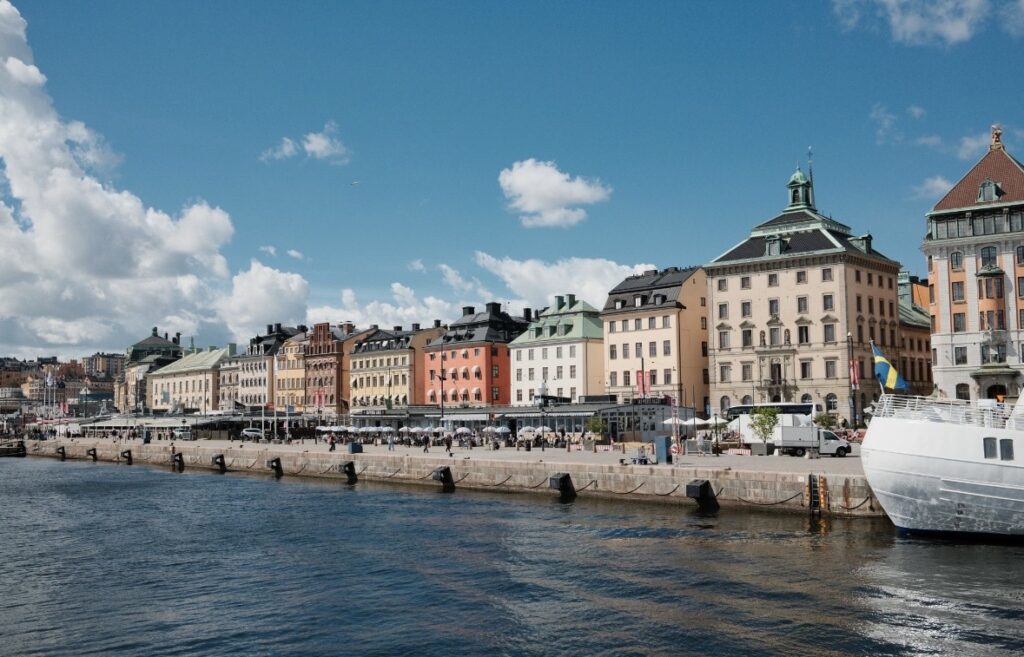
A major difference between America and Sweden is how people get around: walking and taking the bus are the most common and often easiest ways to travel. Having everything relatively close together makes running errands much easier.
“In 15 minutes, I could walk or take the bus to school, the hospital, the market, parks, the city town center, everything is within about a 15-minute reach back home.”
Traveling by foot or using public transportation is not only easy but also safe. Kids as young as seven or eight are often out alone and can even ride the bus for free. It is common to see younger kids out by themselves getting around, whereas in America, it is considered a bit more dangerous and not common.
2. Difference in Culture
Sweden, like many other countries, tends to be more cliquey, and striking up a conversation with a stranger is unusual. It’s uncommon to sit down next to someone you don’t know and ask, “How are you doing?” People tend to stick to themselves and their groups, making it harder to meet others. Despite this social distance, the country cares for and supports everyone; its social norms just differ from our own.
Many other countries, like Thailand, have touristy areas that can get a bit crowded and chaotic. Locals can be wary of travelers because of the negative connotations that come with their intentions, but once they get to know you, they treat you like family.
3. Biggest Piece of Travel Advice: “Travel Blind”
“In 15 minutes, I could walk or take the bus to school, the hospital, the market, parks, the city town center, everything is within about a 15-minute reach back home.”
“Go in blind,” he said in terms of scenery. “When you have someone facilitating it who’s been there, they know where to go.”
A great point McIntyre made was that from his experiences traveling to different countries for so long, it was about landmarks. When you go to places with incredible scenery, you know what to look for and expect because you see it on social media. When he was younger and didn’t have access to platforms like TikTok and Instagram, he didn’t have that expectation for pictures, which made the experience more impactful.

America vs. the World
When comparing different countries, each has its own pros and cons. With the amount of traveling around the world he has done, McIntyre has seen his fair share of both. Without bringing politics and economics into the question, I wanted to know what made the U.S. stand out positively, and his response stuck with me. His answer was simple:
“One thing about the U.S that is great, and I believe this wholeheartedly, is that it is like the one place in the world where you can be whoever you want to be, and I believe that.”

 Share


